
Shiso Gyoza
Crisp on the bottom, tender on top, these pork and garlic chive gyoza (餃子) are wrapped with green shiso for a tasty twist on classic Japanese potstickers.
Servings 4 servings
Calories 483kcal
Equipment
- 1 Colander
Ingredients
For Filling
- 200 grams cabbage (¼ small head)
- 200 grams ground pork
- 30 grams scallions (minced)
- 30 grams garlic chives (minced)
- 15 grams fresh ginger (~½-inch length, grated)
- 1 tablespoon potato starch
- 1 tablespoons toasted sesame oil
- 1 tablespoons soy sauce
- 1 tablespoon sake
- ½ teaspoon salt
- ¼ teaspoon ground white pepper
For Gyoza
- 40 gyoza wrappers (a.k.a. potsticker wrappers)
- 40 leaves green shiso (stems trimmed)
- 2 tablespoons vegetable oil (for frying)
- 3 tablespoons water for steaming
For Sauce
- 2 tablespoons soy sauce
- 2 tablespoons rice vinegar
- chili oil (optional)
Instructions
- Put the 200 grams cabbage in a pot and add enough water to cover it. Cover the pot with a lid and bring to a boil. Boil the cabbage until it is starting to wilt (about 2-3 minutes). Drain the cabbage in a colander while you prepare the other ingredients.200 grams cabbage
- In a bowl, add the 200 grams ground pork, 30 grams scallions, 30 grams garlic chives, 15 grams fresh ginger, 1 tablespoon potato starch, 1 tablespoons toasted sesame oil, 1 tablespoons soy sauce, 1 tablespoon sake, ½ teaspoon salt and ¼ teaspoon ground white pepper.200 grams ground pork, 30 grams scallions, 30 grams garlic chives, 15 grams fresh ginger, 1 tablespoon potato starch, 1 tablespoons toasted sesame oil, 1 tablespoons soy sauce, 1 tablespoon sake, ½ teaspoon salt, ¼ teaspoon ground white pepper
- When the cabbage has cooled enough to handle, shake off any excess water that has collected between the leaves, but do not squeeze the leaves (the water content of the cabbage is the secret to juicy gyoza!). Remove the core and discard. Chop the cabbage into ¼-inch pieces and add it in with the pork.
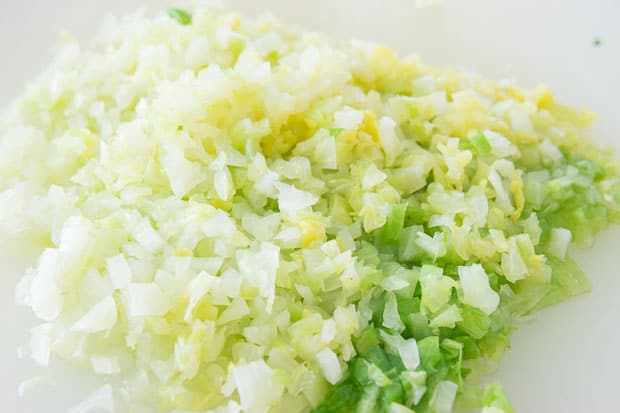
- Put some gloves on and knead the pork and cabbage together until it forms a relatively uniform paste. Gyoza makers in Japan say that gathering up the meat and throwing it back into the bowl makes the filling more tender, but I haven't seen any evidence to support this claim.
- Prepare a bowl of water to wet your fingers with and place 40 gyoza wrappers under a damp towel. Wash and pat dry 40 leaves green shiso. Prepare a tray lined with parchment paper to hold your wrapped gyoza.
- To fold the gyoza, put a wrapper in the palm of your left hand (assuming you're right handed).40 gyoza wrappers
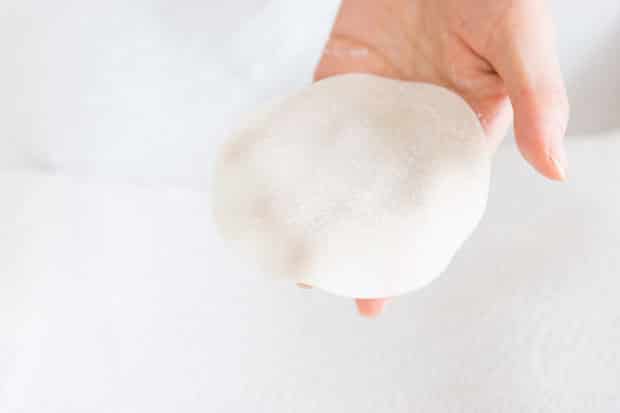
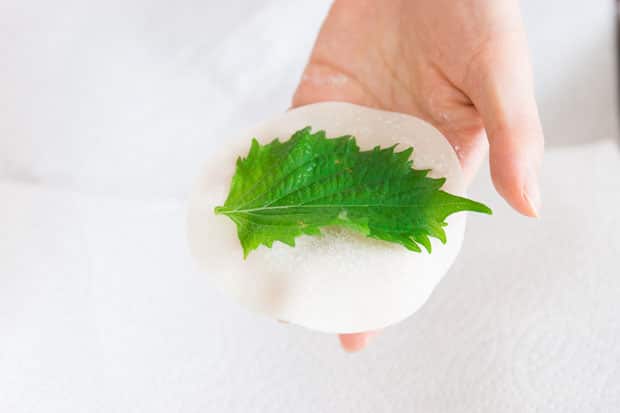
- Place a shiso leaf in the middle of the wrapper. If your leaves are too large, you may need to trim them down so so they fit in the center of your wrapper without going all the way to the edges.40 leaves green shiso
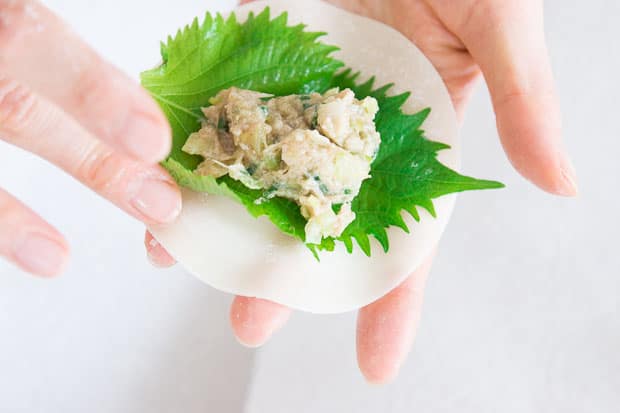
- Add a little less than a tablespoon of filling into the center of the leaf.
- Wet the fingers of your right hand and moisten the entire rim of the wrapper like you would an envelope. You need to get enough water onto the rim to make the wrapper stick, but not so much that you make it mushy.
- Fold the wrapper over and then use your thumb and forefinger to pleat the edge from the left to the right.
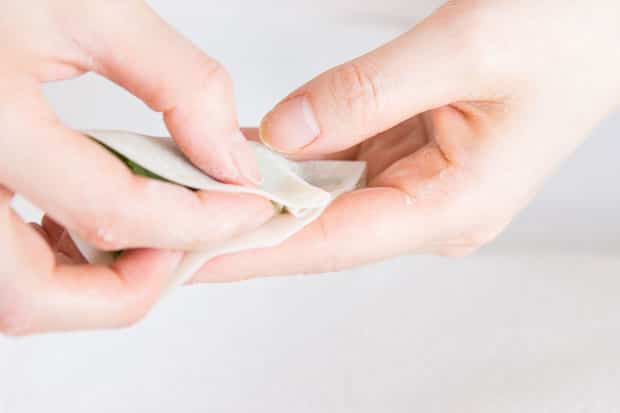
- As you pleat, use your left thumb to press the completed pleats down to seal the dumpling.
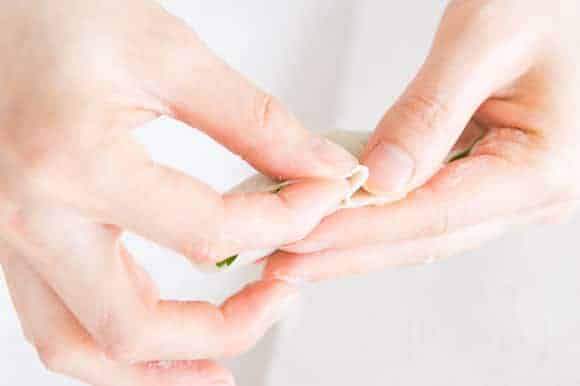
- When you're done, put the dumpling in the palm of your hand and make sure it stands up with the pleats facing up. If it's not stable, tweak the shape a little so that it's able to stand with the pleats facing up.
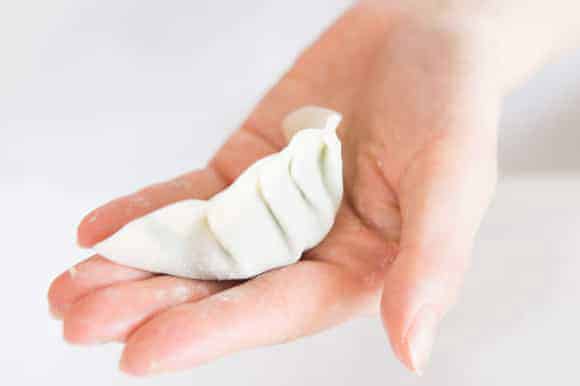
- Place the dumpling on the prepared tray and repeat until you are out of filling.
- To fry the dumplings, prepare a small bowl with 3 tablespoons water. Heat 2 tablespoons vegetable oil in a heavy bottomed 10 to 12 inch non-stick pan over medium high heat until hot. Line up the dumplings in rows and let them fry until the bottoms take on just a hint of color. The pan should fit 10-12 dumplings at a time.3 tablespoons water, 2 tablespoons vegetable oil
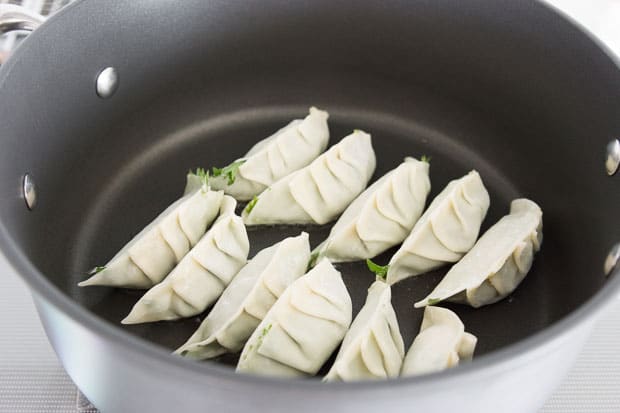
- Hold a lid with the side closest to you touching the pan like an open clam shell (the opening should be facing away from you). Reach around and quickly pour in the 3 tablespoons of water and shut the lid as fast as possible. As you might imagine pouring water on to hot oil will result in a lot of spattering. Be careful and quick to avoid making a mess.
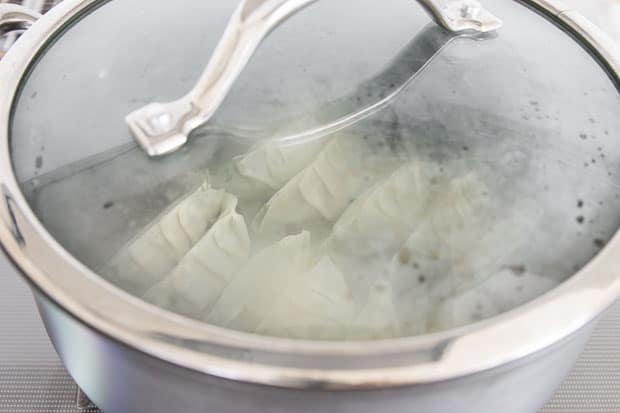
- Let the dumplings steam until there is no water left in the pan (this should take about 2 minutes). Because of variations in pots and their lids it's possible you might run out of water more quickly. If this happens, add a bit more water and continue steaming.

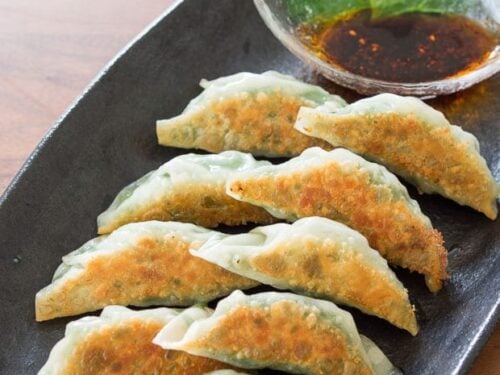
- When the water is gone, remove the lid and fry the gyoza until they are golden brown on the bottom.
- Serve the gyoza browned side up so they don't get soggy. For the dipping sauce, just mix 2 tablespoons soy sauce with 2 tablespoons rice vinegar and add some chili oil to taste.2 tablespoons soy sauce, 2 tablespoons rice vinegar, chili oil
- These gyoza can be frozen on the parchment lined trays. Once they're frozen you can put them in a tupperware or freezer bag. When you cook them, the process is the same, but you will need to use more water and let them steam longer (about 5-6 minutes) to make sure they're cooked through.
Nutrition
Calories: 483kcal | Carbohydrates: 51g | Protein: 18g | Fat: 22g | Saturated Fat: 6g | Polyunsaturated Fat: 7g | Monounsaturated Fat: 8g | Trans Fat: 0.04g | Cholesterol: 43mg | Sodium: 1515mg | Potassium: 398mg | Fiber: 3g | Sugar: 2g | Vitamin A: 464IU | Vitamin C: 25mg | Calcium: 81mg | Iron: 4mg