
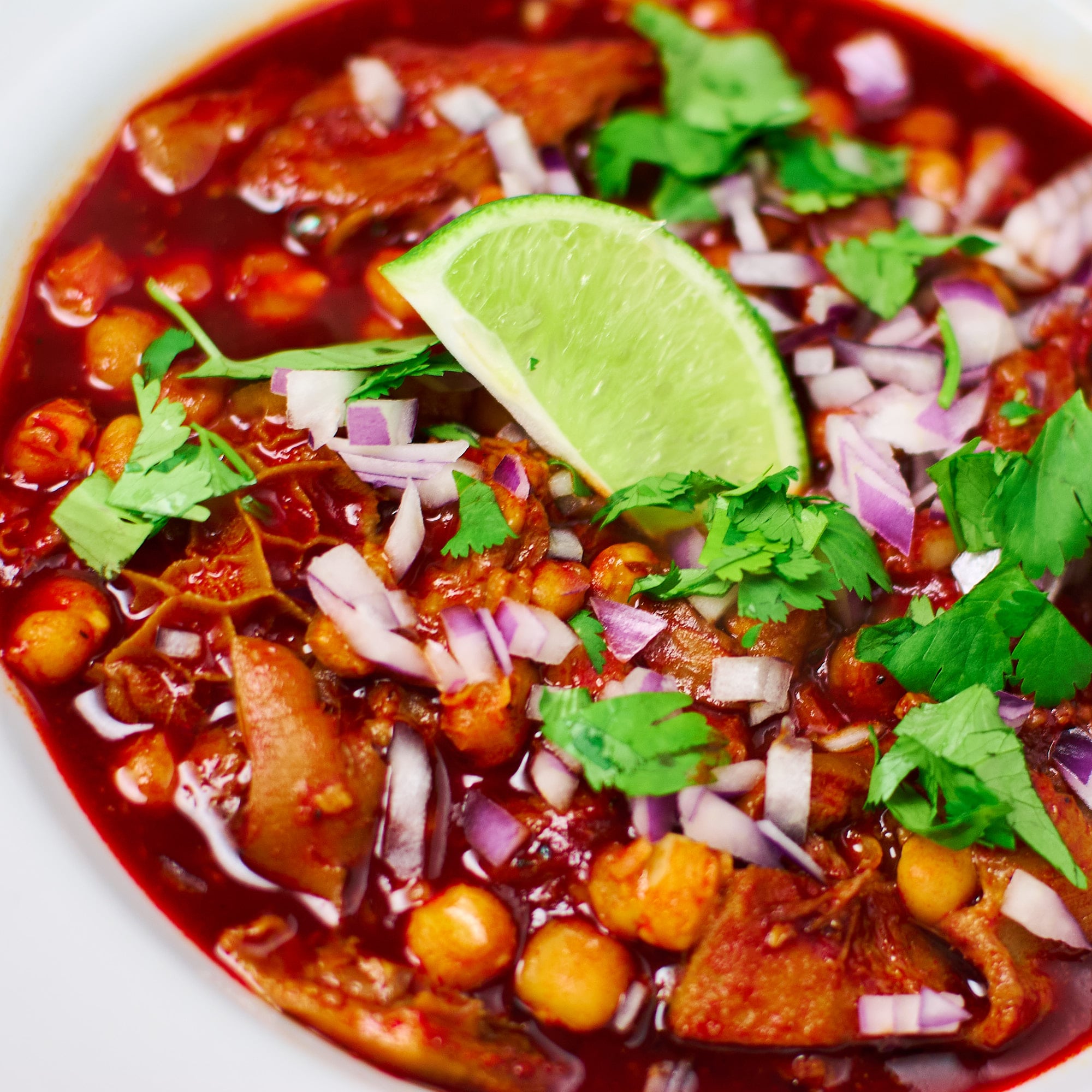
What Is Menudo?
Menudo is a Mexican soup built around beef tripe, the lining of a cow's stomach, and it changes depending on where you eat it. Spanish callos a la madrileña is probably one of its ancestors, but in Mexico the pot picked up chiles, and each region took it in a different direction. In northern Mexico, it's usually called menudo; in central Mexico, pancita or mole de panza; and in the south and Yucatán, mondongo. Some versions are red, others are white, and hominy shows up in some pots but not others.
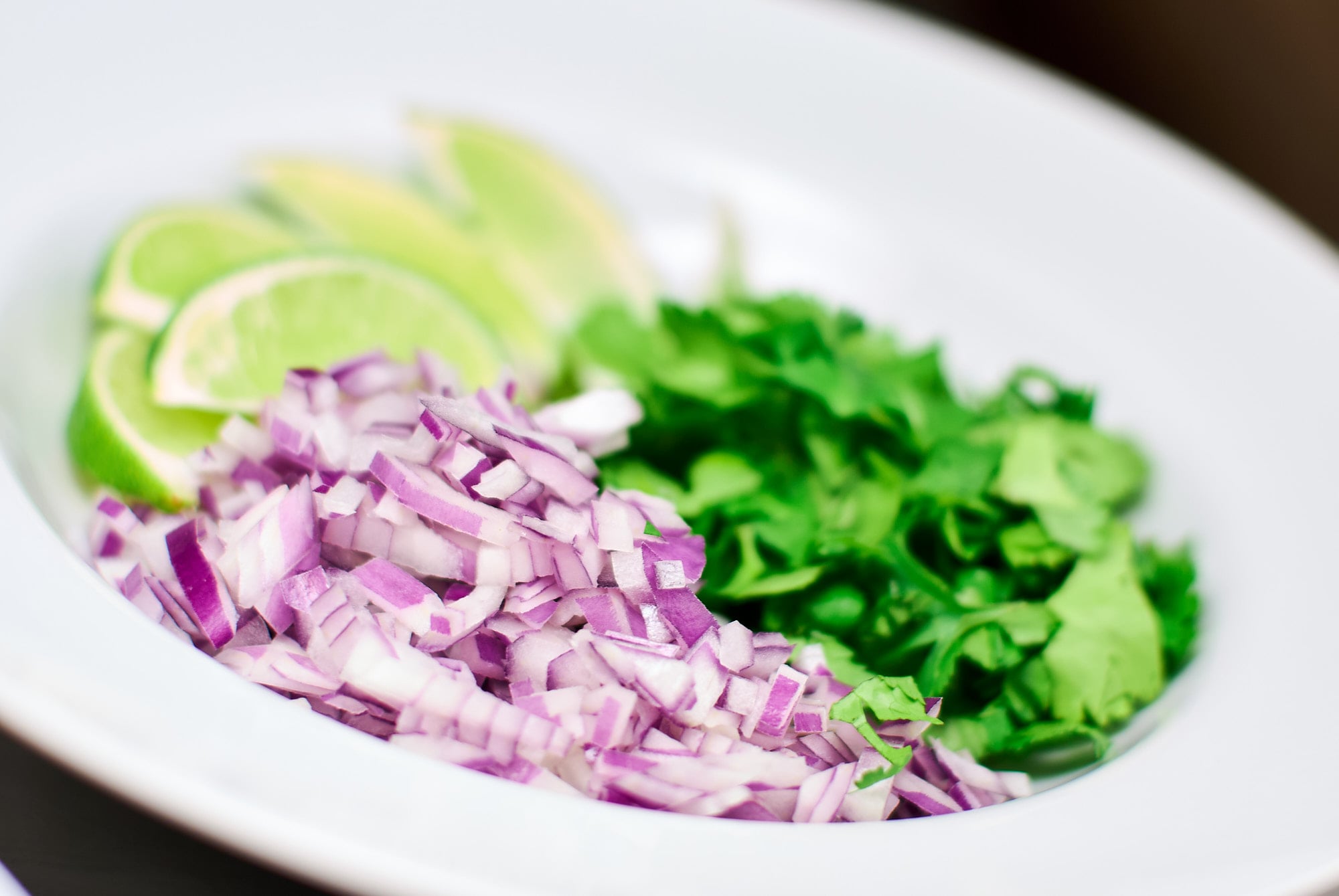
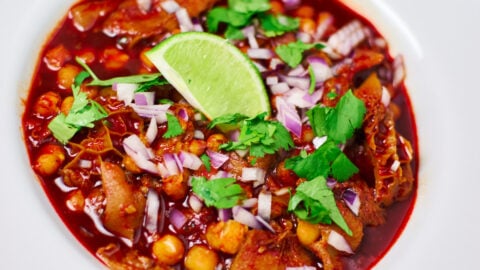
Mine falls on the red side, with guajillo chiles and hominy, plus pig trotters to give the broth rich, silky body. The long simmer mellows the tripe's flavor, makes it tender, and gives its ridged surface time to hold onto the chile broth.
Jump to:
Why My Recipe Works
- Prepare the tripe in stages: Soaking, parboiling, and then braising the tripe in an aromatic broth mellows its gaminess, tenderizes it, and gives it time to absorb the broth's flavor.
- Braise the tripe and trotters together: I use honeycomb tripe with pig trotters because a long braise converts collagen into gelatin, giving the red chile broth a rich, silky body. Once the bones come out, the chopped meat and tendon meld into the soup.
- Toast and strain the chiles: Briefly roasting the guajillos brings out their sweet, peppery aroma. Blending them with the stock and straining the puree gives the broth a smooth texture.
- Finish in the chile broth: The final uncovered simmer gives the tripe and hominy time to take on the color and flavor of the chiles.
Key Ingredients for Menudo
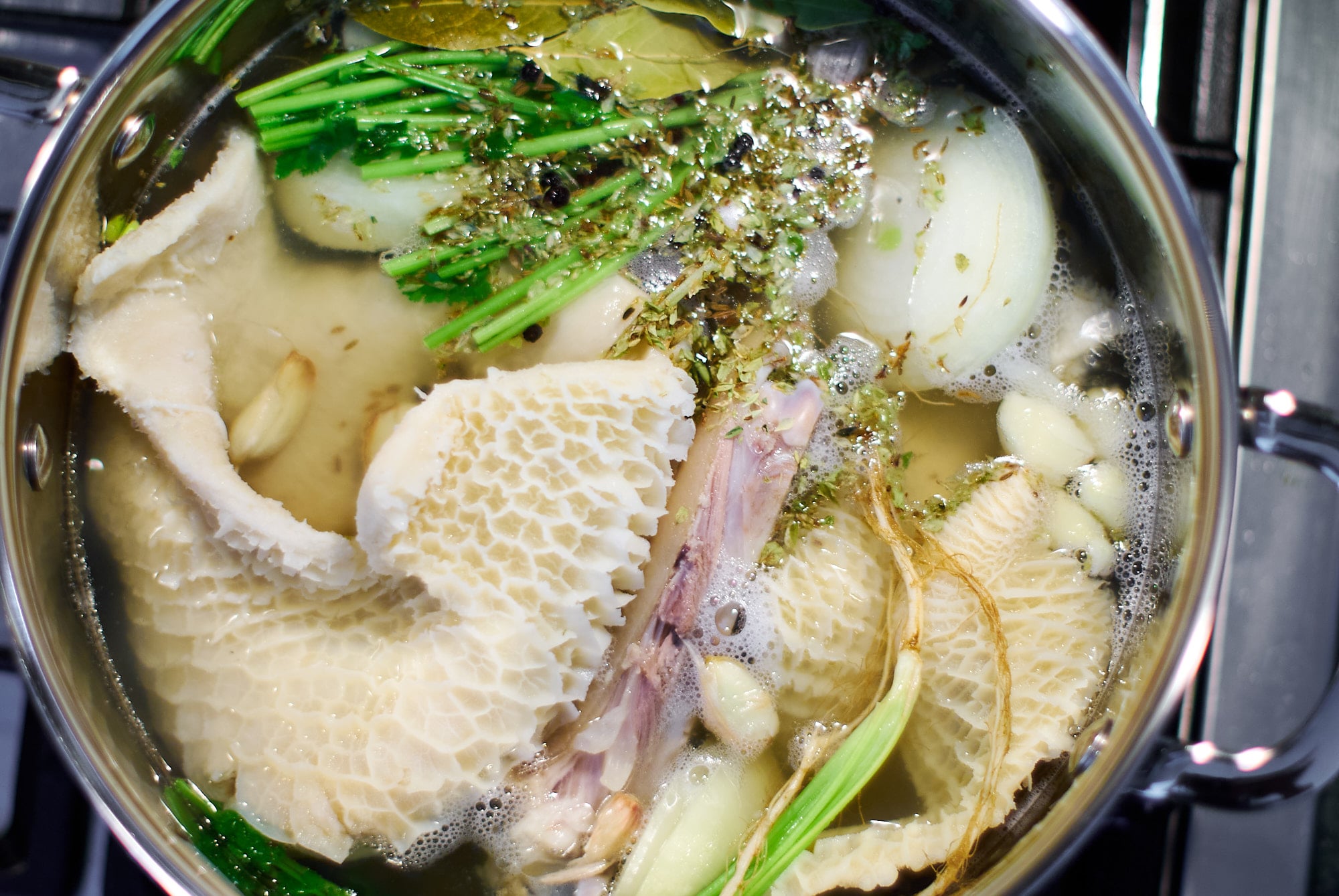
Honeycomb tripe has a ridged surface that absorbs the chile broth like a sponge, but it needs a long, gentle braise to become tender.
Pig trotters supply the collagen that gives the broth body. Their meat and melty connective tissue get chopped up and returned to the soup after the bones are removed.
Dried chiles build the broth in layers. Guajillos provide the crimson color and gentle sweetness, while a few chiles de árbol add some heat. You can add more if you like your menudo spicy.
White hominy adds a satisfyingly chewy texture and makes each bowl substantial enough to serve as a meal.
Aromatics and seasonings include onion, garlic, cilantro stems and roots, peppercorns, bay leaves, cumin, and Mexican oregano. Added at the end, vinegar and evaporated cane sugar balance the broth with mild tang and sweetness.
How to Clean and Prepare Tripe for Menudo
The preparation has three stages, but the active work is short:
- Soak or rinse the tripe. Soak white, bleached tripe in changes of cold water to mellow its chlorine aroma. If the tripe is unbleached, rinse it thoroughly and trim excess fat from the smooth side.
- Parboil it with the pig trotters. This loosens surface residue so it can be rinsed away before you build the aromatic broth.
- Braise it slowly. A gentle simmer tenderizes the honeycomb tripe and extracts collagen from the trotters. After the meat is cut up, it finishes cooking in the strained chile broth.
Honeycomb tripe needs time. A short simmer leaves it tough, with a flavor that sits apart from the broth. Given a slow braise, the tripe becomes tender yet resilient, and every nook and cranny pulls in the rich flavor of the red chile broth and aromatics, replacing any gaminess.
How to Serve Menudo
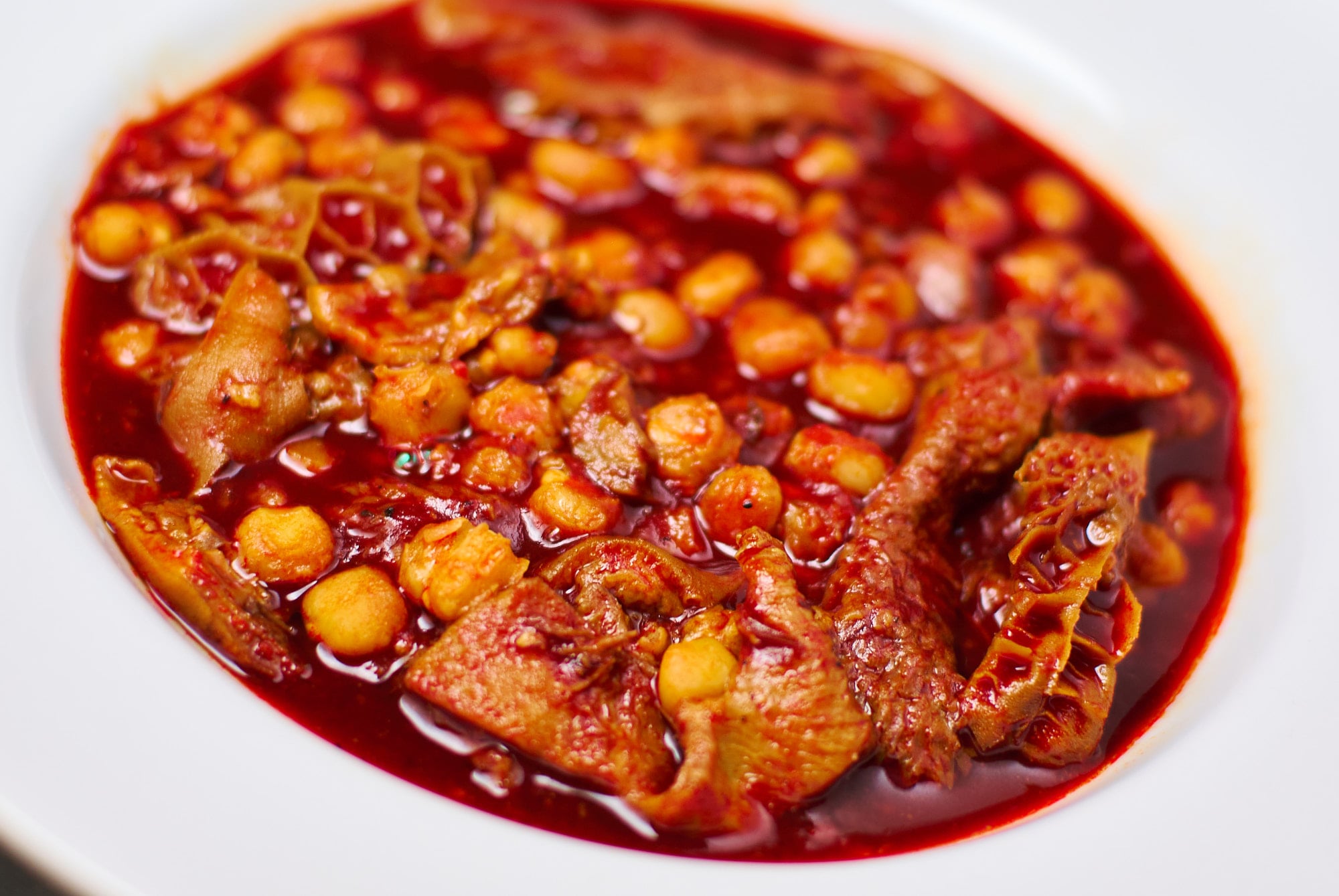
The broth is unctuous, so the garnishes do more than add color. Lime cuts through the gelatin-rich body, while raw onion adds a crisp sweetness and cilantro keeps each spoonful vibrant and fresh. Serve it with homemade corn tortillas to dip in the broth.
The leftovers are excellent with scrambled eggs and tortillas or served with a side of migas.
For a larger Mexican spread, serve smaller bowls of menudo alongside Tacos Al Pastor or Carne Asada.
Recipe
Menudo
Equipment
Ingredients
- 900 grams honeycomb tripe
- 2 pig trotters
- 10 cups water
- 1 large onion (sliced)
- 1 head garlic (smashed)
- 5 plants cilantro (stems and roots only)
- 1 tablespoon black peppercorns
- 2 whole bay leaves
- 1 teaspoon cumin seeds
- 2 teaspoons Mexican oregano
- 4 chiles de árbol (small spicy red)
- 3 tablespoons kosher salt (halve if using table salt)
- 2 tablespoons vinegar
- 115 grams dried guajillo chiles
- 3 cups cooked white hominy
- 2 tablespoons vinegar
- 2 tablespoons evaporated cane sugar (or piloncillo)
- 2 cloves garlic (minced)
- 1 teaspoon Mexican oregano
- ½ teaspoon ground cumin
Instructions
Why it works- If your tripe has been bleached (white color), soak it in a couple changes of cold water for a few hours to get rid of the chlorine smell. If you are using unbleached tripe (grey or greenish brown), thoroughly clean it under cold water and remove any extra fat on the smooth side.
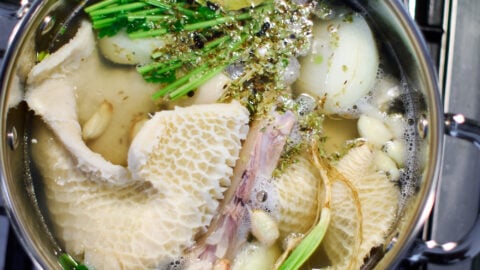
- Bring a large pot of water to a boil then add 900 grams honeycomb tripe and 2 pig trotters. Boil for about 5 minutes then drain, discarding the water, and wash the tripe and foot clean of any brown gunk that's collected on the surface.
- Wash the pot out and return the cleaned tripe and trotter to the pot then add 10 cups water, 1 large onion, 1 head garlic, 5 plants cilantro, 1 tablespoon black peppercorns, 2 whole bay leaves, 1 teaspoon cumin seeds, 2 teaspoons Mexican oregano, 4 chiles de árbol, 3 tablespoons kosher salt, and 2 tablespoons vinegar. Cover and bring to a boil, then turn down the heat to low and simmer for 3 hours. Turn off the heat and allow it to cool to room temperature.

- Remove the tripe and brush off any spices or brown stuff. Slice it into ½" x 2" strips. Remove the trotters, clean and strip off the meat and tendon then roughly chop. Strain the stock through a double mesh strainer into a bowl and press on the solids. Wash out the pot and add the chopped tripe and trotter back into the pot.
- Place the oven rack in the lower middle position and preheat to 350 degrees F. Tear 115 grams dried guajillo chiles open and discard the stems and seeds. Flatten the dried chilies on a foil lined baking sheet then spritz with cooking spray. Put the chilies in the oven for about 5 minutes or until you start smelling sweet and peppery, be careful not to burn them. Remove them from the oven and cover with very hot tap water and allow them to rehydrate (about 15-20 minutes).
- Drain the chilies and put them in a blender with about half the stock. Puree until smooth, adding more stock if needed. Strain the chili mixture through a double mesh strainer into the pot with the tripe and trotters. Once you have strained the chili mixture, pour the rest of the stock through the strainer into the pot, pressing on any remaining solids.
- If you are using frozen hominy, measure out 3 cups cooked white hominy into the pot. If you are using canned hominy, wash and soak in cold water to get rid of the "canned" taste. Add 2 tablespoons vinegar, 2 tablespoons evaporated cane sugar, 2 cloves garlic, 1 teaspoon Mexican oregano, ½ teaspoon ground cumin, and lightly salt to taste and simmer uncovered for about an hour, until the tripe has taken on the color of the chilies and the soup is nice and thick. Check once last time for salt and augment if needed.
- It's best if you let it rest overnight for the flavors to mingle, but you can also eat it right away. Serve with tortillas, chopped sweet onions, cilantro and lots of lime.
Notes
Nutrition Facts
Recipes in your inbox
I'll send you recipes and ideas to get you excited about cooking.
FAQ
Both are Mexican soups that can include hominy and a red chile broth, but menudo is built around tripe, while pozole centers on hominy and is typically made with pork. Their seasonings and garnishes can overlap, but they remain distinct dishes.



Ethel Reiz says
Great and amazing!
Marc Matsumoto says
Thanks Ethel!
F Patrick says
Delicious,, an acquired taste. Del barrio de
San Antonio Texas
Marc Matsumoto says
Thanks! Glad to hear you enjoyed it!
Andrew Padilla says
Love it add my own variations and it’s a hit
I add New Mexico red chile
Marc Matsumoto says
Happy to hear you've been enjoying this, and good call on using New Mexico chiles. I wish I could get them here!
Amy says
I made this several times and will not use any other recipe, plus i added to it
Marc Matsumoto says
Hi Amy, I'm so happy to hear you've been enjoying this. I published this recipe almost 2 decades ago. Glad there are people still finding it useful.
Lynette G says
Excellent recipe! I appreciate the thorough instructions. I have loved menudo for years and never thought I could make it. I was skeptical of simple recipes, because I’ve eaten menudo without much flavor. This recipe tastes like authentic Mexican menudo.
Marc Matsumoto says
Thanks Lynette, I'm happy to hear you enjoyed it! Thanks for taking the time to let me know!
yay says
10/10 Love it. Only grip is too much vinegar
Miguel Bustamante says
This is the recipe I've been looking for. Thank you for this. Was looking at 10 other recipes that were lacking ingredients, flavor, and the method. This is the ultimate authentic recipe. Delicious!!! I'm bringing my menudo to a small gathering and I know everyone will love it. Gracias!
Marc Matsumoto says
I Miguel, I'm so glad to hear you enjoyed this, thanks for taking the time to let me know!
Joe Wilcox says
First time you’v recipe, going to try it. What to get out of my way of making it. Thought there’s got to be a better way to make it.
Pedro Ramirez says
Aye dumbass if it's greenish brown or grey I think u should throw that meat out!!!! ?
Maureen Peterson says
This looks atrocious. I''m not sure how I could even keep it down. Cow belly and pig feet ugg
Dan says
You talk to much. Get to the recipe already! And it's not that good. Ur not a Mexican are you?