
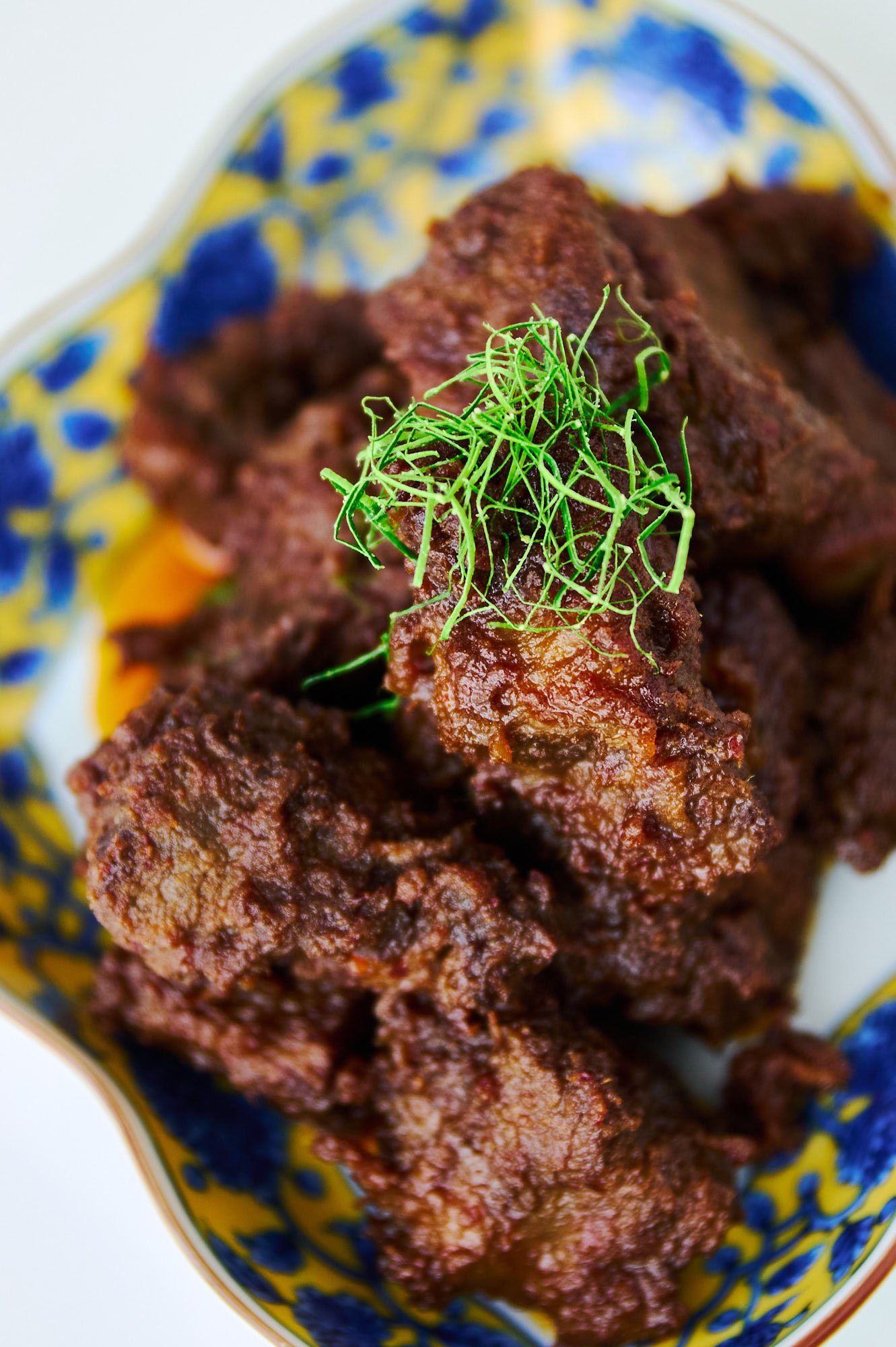
Beef Rendang is often considered the crown jewel of Indonesian cuisine, and for good reason. Its rich, complex flavors unfold in waves-bright notes of lemongrass and makrut lime leaves dance with the deep richness of caramelized beef and coconut cream while the heat of chilies urges you to go for another bite. I learned how to make this Indonesian classic during a rainy afternoon spent at a friend's kitchen in Singapore, where we simmered, stirred, and shared stories over the enticing aroma of spices. This Beef Rendang recipe captures the essence of that afternoon, blending tradition with techniques that make it approachable for any home cook.
Jump to:
Why My Recipe Works
- Making a homemade rendang paste from fresh aromatics and spices creates the foundation for the bold, complex flavors of authentic Rendang.
- The long cooking process slowly renders the fat and breaks down collagen into silky gelatin. This lubricates the meat, making it irresistibly tender and moist. That's why it's important to use a cut of beef (like chuck or beef shanks) that's marbled with fat and connective tissue.
- Allowing the rendang curry to reduce until it starts to caramelize around the beef is the key to the nutty aromatic flavor and rich umami of Indonesian Beef Rendang.
- Letting the Rendang rest overnight gives the spices and aromatics time to meld, creating a deeper, more harmonious flavor profile.
What is Beef Rendang?
Beef Rendang is a rich and flavorful Indonesian dish that hails from the Minangkabau people of West Sumatra. Often described as a dry curry, this dish is slow-cooked in a fragrant blend of spices, coconut milk, and herbs until the liquid evaporates, leaving the beef deeply caramelized and packed with intense flavor.
Originally, Beef Rendang was more than just a delicious meal-it was a method of preservation. In an era before refrigeration, wealthy Minangkabau farmers would prepare Rendang after slaughtering a cow for special occasions. By cooking the beef in a combination of blisteringly spicy chili (thanks to capsaicin's natural antimicrobial properties), reducing the moisture to almost nothing, and enveloping the meat in coconut fat, they created a dish that could last for weeks in Indonesia's sweltering heat.
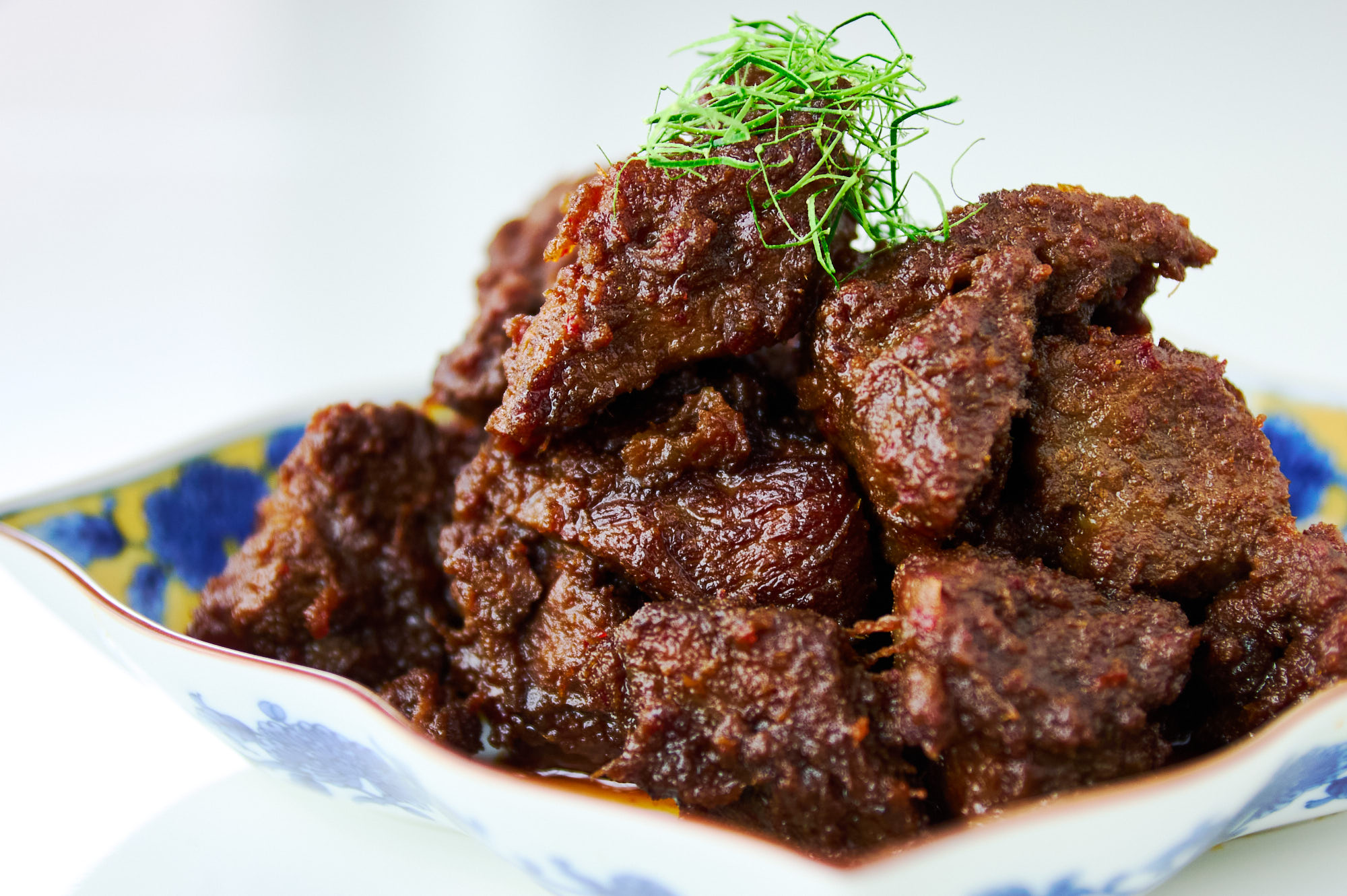
Difference Between Indonesian and Malaysian Rendang Beef
While Indonesian and Malaysian Beef Rendang recipes share a common heritage, they differ in flavor, texture, and preparation, reflecting the culinary traditions of each region. Indonesian Beef Rendang, particularly the version from West Sumatra, is typically cooked until almost all the liquid evaporates, leaving the meat dark, caramelized, and coated in a rich, concentrated paste. This "dry" Rendang emphasizes deep, nutty, and smoky flavors. On the other hand, Malaysian Beef Rendang often retains more sauce, resulting in a creamier texture. The Malaysian version tends to be milder and sweeter with a balance of flavors emphasizing coconut milk and aromatic spices like cinnamon, star anise, and cardamom.
Ingredients
Rendang Paste
The spice paste is the heart of this Beef Rendang recipe, infusing the dish with its signature layers of bold, aromatic flavors. A blend of coriander seed, turmeric, ginger, garlic, shallots, and chili flakes creates a balance of earthy warmth, zesty brightness, and fiery heat. Traditionally, these ingredients required judicious pounding with a mortar and pestle to turn them into a smooth paste. Fortunately, a food processor will make quick work of it, saving time and reducing wear and tear on your wrists.

Herbs
The addition of fresh herbs like lemongrass stalks, galangal, and makrut lime leaves (a.k.a. kaffir lime leaves) lend the curry a fragrant, citrusy brightness that perfectly complements the richness of the beef and rendang spices. You should be able to find these herbs at Southeast Asian grocery stores, and they freeze beautifully for future use-so stock up when you can!
Beef
Choosing the right cut of beef is key to making the good Rendang. Tougher cuts like beef shanks, chuck, or short ribs are ideal, as they are rich in connective tissue and fat. As the curry cooks low and slow, the collagen in these cuts breaks down into gelatin, giving the beef a tender, buttery texture that melts in your mouth. Lean cuts won't deliver the same moist, flavorful results, so don't skimp on the marbling.

Coconut Milk
Coconut milk balances the bold rendang spices with its creamy, velvety richness. Traditionally, it's pressed fresh from shredded coconut, but if that's out of reach, there's a convenient alternative that captures the flavor of fresh coconut milk. Desiccated coconut cream powder, like the kind from Kara, is made by spray-drying fresh coconut milk, preserving its full flavor and creaminess.
How to Make Beef Rendang
To make this Beef Rendang recipe, start by preparing the rendang spice paste. Combine shallots, garlic, ginger, turmeric, ground coriander, chili flakes, and salt in a food processor and blend until smooth. This spice paste is the flavor foundation of this dish, so make sure there are no clumps-it should be creamy and fragrant. If the paste feels too thick or dry, add a tablespoon of water to help it along.
Next, heat a heavy-bottomed pot over medium-high heat and add some vegetable oil. Sear the beef pieces in batches until each side is beautifully browned. Browning is a crucial step-Maillard browning enhances the savory depth of the beef by developing complex, caramelized flavors. Avoid overcrowding the pan, as this traps steam and prevents proper browning. Once browned, set the beef aside.
Using the same pot, fry the smashed lemongrass stalks, kaffir lime leaves, and galangal in the remaining oil until their aromas fill your kitchen. Turn the heat down to medium-low and add the spice paste. Fry it while stirring constantly to prevent sticking or burning. If the mixture starts to scorch, lower the heat and add a splash of water to keep it from burning.
Prepare the coconut milk by rehydrating coconut cream powder in warm water, or use canned coconut milk if that's what you have on hand. Stir the coconut milk into the pot along with a bit of palm sugar for balance. Return the beef to the pot and bring everything to a gentle simmer. Cover the pot loosely to allow steam to escape, and cook on low heat for several hours. Stir occasionally to ensure nothing sticks to the bottom and to evenly coat the beef in the rich curry sauce.

As the curry simmers, the liquid will gradually reduce, thickening the sauce and concentrating its flavors. After about three to four hours, the sauce will have nearly evaporated, leaving the beef coated in a dark, caramelized paste. At this stage, increase the heat slightly to fry the remaining sauce in the rendered oil, further intensifying the dish's flavor. Keep stirring to avoid burning, and stop when the beef is richly browned and the sauce clings to it like a glaze.
For the best results, let the beef rendang rest overnight in the fridge before serving. This allows the flavors to meld and deepen, creating an even more flavorful dish. When stored properly, the low moisture content of this dish makes it perfect for reheating and enjoying with steamed rice over several days-just as it was originally intended.
By the way, if you don't have the time to make this version of Rendang, I've developed a faster Chicken Rendang recipe that comes together in about an hour and still delivers a wallop of flavor.
Recipe
Beef Rendang
Equipment
Ingredients
- 1 teaspoon salt
- 1 teaspoon ground coriander seed
- ¼ teaspoon ground turmeric
- 2.5 centimeters fresh ginger (roughly chopped)
- 25 grams garlic (roughly chopped)
- 200 grams shallots (4 large roughly chopped)
- 3 tablespoons chili pepper flakes (to taste)
- 2 tablespoons vegetable oil
- 900 grams beef shanks or shortribs (cut into large cubes)
- 2 stalks lemongrass (white part only, smashed)
- 4 kaffir lime leaves (or 1 teaspoon Makrut lime zest)
- 2.5 centimeters galangal (sliced into coins)
- 2 packs coconut cream powder (or 1 can coconut milk)
- 1 tablespoon coconut sugar (brown sugar or palm sugar can be substituted)
Instructions
Why it works- Add all the 1 teaspoon salt, 1 teaspoon ground coriander seed, ¼ teaspoon ground turmeric, 2.5 centimeters fresh ginger, 25 grams garlic, 200 grams shallots, and 3 tablespoons chili pepper flakes to a food processor and run until there are no clumps left and you have a smooth spice paste. You'll need to scape the bowl down a few times. It's possible to double the recipe and freeze half for another time.

- Add the 2 tablespoons vegetable oil to a heavy bottomed pot and heat over medium high heat until shimmering. Fry the 900 grams beef shanks in batches, allowing each surface to brown before turning. Transfer the browned beef to a bowl and repeat with the remaining meat.
- Smash 2 stalks lemongrass and add them to the pot along with 4 kaffir lime leaves, and 2.5 centimeters galangal to the hot oil and fry until fragrant. Transfer to the bowl with the browned beef, leaving the oil in the pot.
- Turn the heat down to medium-low, and then add the spice paste ingredients. Fry, stirring constantly until very fragrant and most of the moisture has evaporated (about 10-15 minutes). If the paste starts burning, reduce the heat and add a bit of water.
- Rehydrate the 2 packs coconut cream powder in 2 cups of water and then add it to the pot along with the 1 tablespoon coconut sugar. Return the beef and herbs to the pot and stir to combine.
- Turn the heat down to medium-low and loosely cover it with a lid (you want some steam to escape). Stir the Rendang periodically and simmer for 3-4 hours until the meat is very tender. You can speed this process up by cooking in a pressure cooker for 45 minutes.
- Once the meat is tender and most of the liquid has evaporated (about 4 hours), remove the lid and turn up the heat. At this point, there should be quite a bit of oil in the pot from the meat, so you're essentially frying the sauce and concentrating the flavors. You'll need to stir the mixture constantly to prevent it from burning, but you want to evaporate as much liquid as you can without burning the meat. Keep in mind that oil does not evaporate during cooking, so you will still have a bit of oil at the bottom of the pan.
- The rendang beef is done when almost no sauce is left and the meat is dark brown. Ideally, you'll let this sit overnight for the flavors to evenly distribute into the meat. During this time, the meat will turn chocolate-colored, and the flavors will deepen. Serve the beef rendang with steamed rice.


Nutrition Facts
Recipes in your inbox
I'll send you recipes and ideas to get you excited about cooking.



Blake says
I made this recently and I used silverside of beef. Worked a treat
vanyali says
Galangal is like ginger. Lemongrass is like lemon. It will be ok with those substitutions.
vanyali says
Because you are supposed to cook it long enough for the sauce to dry up. So if it is still wet with sauce, you should cook it longer.
Lilly says
I'm 17 and have grown up with a family that is always up to trying foreign cuisine. I made this last night for my family and they loved it! Thanks for the simple directions and delicious recipe!
joelovesfood says
By far the best beef rendang recipe I have tried so far.
Believe you me that it is authentic and delicious as I am a typically fussy Peranakan and the wifey is Indonesian Chinese. Both love to cook and eat.
Jerusha says
Schooled!
Hahaha... Just kidding Aziz! But really, I have been schooled about what oil "shimmering" is ... Thank u!
Nicolas says
I added
Fresh shredded coconut
1 Star Anise
1 orange zest ( 1-2 cm sq )
Juice of 1 lime
Maybe I will try a stick of cinnamon next time as well
Prune juice would make it very sticky and against extra chilli maybe...?
I also added fresh corriander just before serving and some wedges of lime on the side
Very nice
aims66 says
Hi there, when you've cooked it days ahead how do you stop it from completely drying out when you reheat it or is that not issue?
LadybirdLynnie says
This is an absolutely beautiful dish! Made it for friends last night and they really enjoyed it. Will definitely make it again.
Marc Matsumoto says
Hi Dill, while marbling is great, having a lot of connective tissue is even more important in a dish like this. That's why cheap cuts of beef work best. Shank or short rib are the best options, but chuck would work as well.
Dill says
Looks like it is important for the meaty to be marbled. Any suggestions for other cuts of beef etc that would be comparable?
Cooking Guy from Canada says
I've scoured the web for beef randang recipes - and this is the best one by far. Other recipes rely on five spice powder or too many spices, which muddies the flavour of the final product. I've made it multiple times, and my guests always LOVE it. Best made a couple days ahead of time so the flavours mellow and meld - which makes it a prefect dinner party dish. It's important to really could down the sauce, to the point that it tightens and caramelizes. The spices really deepen and the edge is taken off of the inherent sweetness. Absolutely great recipe.
(Luckily - I live in a city with a huge number of Asian markets - so getting lemon grass, kaffir lime leaves, or dried coconut milk is never a problem. Galangal can be a little difficult to find but when I see it - I'll buy a bunch and freeze it. I find it keeps extremely well.)
Archangela says
Hi, my English is not really good, and so if I understand this article,
it is stated that "Rendang is not rendang if it has a sauce". But why in
all picture of rendang, it is a little bit wet such there is sauce
poured into it? Thank You 🙂
mudassiranwar says
Thank you so much. I am planning to prepare it for a feast. Will update you of the outcome. Cheers
Marc Matsumoto says
Hi Mudassiranwar, glad to hear you were able to find them! If they're dried, just add them(the lemongrass and galangal) in after all the frying steps when you add the coconut milk.
mudassiranwar says
Hi Marc. I finally found galangal here but in dried form. Would it work? If so how to use it? Regarding lemongrass it is available as dried pieces/slices. Any suggestion for this? Thanks in advance for your help.
mudassiranwar says
Cheers for your prompt response. I live in a small town of Pakistan. I think these ingredients might be available in big cities (though I am not sure) but definitely not here where I live. Regarding Galangal I will ask some herbalist if they have it in dried form.
Marc Matsumoto says
Hi Mudassiranwar, both ingredients are a fairly crucial part of the herb blend that makes rendang rendang and there aren't really any similar ingredients that can be substituted. Where do you live?
mudassiranwar says
Hi Marc. Beef Rendang is one of my favorites. I am definitely gona try this recipe as ever since I tried this dish in Malaysia I was looking for the authentic recipe and yours seems authentic! I have a query: I can't find Lemon grass stalks and Galangal where I live, can I substitute them with something else? If so what's that? Thanks a billion!
Marc Matsumoto says
Glad to hear you enjoyed it!—
Sent from Mailbox
Bill says
I just prepared this dish based on your recipe, and it turned out awesome! Thanks!
pooh bear says
Why is there no kerisik...? My Chef taught me to cook rendang with it. will this taste the same without?
Marc Matsumoto says
It's hard to describe, but canned coconut has that "canned" taste to me. The spray dried variety obviously isn't going to be quite as good as fresh coconut milk, but I like the fact that it doesn't taste old. That aside, it's lighter to carry home from the grocery store and smaller to store:-)
Roziana Kamaludin says
Why do u choose the powdered kara coconut milk instead of the liquid ones? is there any difference?
Jay Ryan says
Hi Marc, Thanks for posting the recipe! I just made a batch using venison and a little pork belly for fat and it is so good, I want to eat it now, not wait over night for it to set up. Great thing to cook on a snow day!
rol says
but statistics show that minang people rates among the highest in heart attacks...
Marc Matsumoto says
The problem with using a pressure cooker is that you don't get much evaporation, so you're going to need to cook it for a while on e you open up the lid to get the sauce "dry" enough. One way you can speed it up is to pressure cook it until the beef is tender, e move the beef from the cooker, then boil on high uncovered until the sauce until very thick, and then add the beef back at the end until there's almost no sauce left. It's important to remove the beef because boiling the tender beef on high will make it fall apart.
outRIAAge says
That's an intriguing idea. At first I thought: "Certainly not," but it's worth a try. The key would be to allow the pot to boil dry under pressure: a perfect rendang looks like a gruesome cooking disaster, after all. Good luck on the timing, though: there'd probably be only a couple of minutes between perfect rendang and actual cooking disaster.
CHL says
Hi Marc, can we possibly shorten the cooking time without loss of flavor using pressure cooker? If so, how should we braise with a pressure cooker?
Nay Jade says
i want to taste rendang cooked with marbling meat 😛
i can find rendang everywhere here.. but with those marbling meat.. i must be wealth enough to taste it..
Cris says
Hi there,
I love this recipe - I've made it several times and it's always a hit.
A couple of modifications/additions I've made;
- let the bottom burn go dark/almost burn for a richer flavor when you're still simmering the rendang
- add fresh curry leaves and fresh/dessicated coconut at the final stage where you're frying the rendang in its own fat
- open 2 tins of coconut milk - use 1, and then scoop and use the fat from the second tin. Maybe i'll just try coconut cream next time!
- double the palm sugar
The biggest difference is made when adding the fresh curry leaves though, I really recommend people give this a go!
Cheers,
Cris
Michel Defays says
This recipe is easy to make, but unbelievably goooooood !!!!!
Ray Gazley says
A questionable title to hold (The Best Discussion Concerning Beef/Halibut Rendang). But I'll take it. Great site Marc, am loving the food inspiration.
outRIAAge says
You'll have me blushing, sir. I didn't know about the water loss simply because it was the first time I'd done fish sous vide. (What? Walk first, then run? Pah! Life's too short...) But it wasn't an issue: the sauce had been greatly reduced, and I'd serendipitously cold-smoked the halibut while the sauce was reducing, which semi-dried it.
Marc Matsumoto says
If there were a prize for best discussion thread on this blog, you guys would have won it. So nice to see people engaging in informed discourse over food.
BTW, sous vide Halibut Rendang, brilliant! Though how did you control for the amount of water the halibut releases while sous viding? I've found that lighting salting and air drying fish in the fridge for a day before bagging it tends to help reduce the amount of water released when bagged and bathed, but not sure the halibut would survive that plus a multi-day marinade.
outRIAAge says
I may indeed visit soon. I'm Scottish, so a country with 3M people and 80M sheep obviously appeals to me 🙂 I'm such a food geek I'm liable to do the experiment myself, but then I'd have a double batch of beef rendang, what a shame...
BTW: I recently managed to get the meat rendang complexity with halibut. I reduced the sauce for hours, sealed it with the halibut in a sous vide bag, left them in the fridge for a couple days so they had time to get acquainted, then cooked at 132F for two hours. In a long life of cooking, it might have been my finest hour so far.
Ray Gazley says
Hi SF - I can see your point there...would require two side by side blind taste tests to confirm. I live in New Zealand in the South Pacific - so I'm not sure if this is possible?
outRIAAge says
What a great improvised technique! I'm experimenting (successfully) with using a rarely-stirred, partially-covered pan in a low oven for the necessary "long evap."
My only question, and it's a real one, is whether cooking it all wet for hours, then doing a short evap at the end, is equivalent to the real thing, where the meat meets more-and-more concentrated sauce as time goes by, instead of all at the end. I think I'll stick with my technique for now, but might try yours.
Ray Gazley says
Made this last night with beef cheeks I had on hand... OMG - delishy mo mo nom nom nom. Substituted the long cooking bit in my crock pot then turned it out into a large shallow saucepan to evap the sauce and it was the business. Husband could barely walk afterward, teach him for being a glutton - testament that this is a great recipe. Thanks, RG
Jack says
I was using a electric cooker, basically no flame just heated pads to cook on, its all I have just now 🙁 Yeah I think my heat was too low throughout. I never saw the red oily colour appear at all though even after 5hrs cooking.
My end product looks like rendang but it never turned the dark colour like in your pics.
Marc Matsumoto says
Hi Jack, if the liquid didn't evaporate, then the heat was either too low, or the lid wasn't ajar enough. I'm not sure what an electric hob is, but I wonder if this might have been part of the problem. Is it something like a crockpot? If so, it's likely a temperature issue as crockpots will not get hot enough.
Jack says
so I had all the ingredients, used 400ml coconut milk, followed the recipe almost exactly apart from using a frying pan until it was all mixed together then transferring to a pot to simmer on a electric hob. The colour looked the same as the first pic but let to cook for hours and the red oily colour never showed up even after 5 hours cooking and there was still lots of liquid left. Any ideas what is going wrong?
Marc Matsumoto says
Hi Jack, 2 packs of freeze dried coconut cream is equivalent to about 1.25 cans of coconut milk. 2-3 cans sounds like way too much as it will take forever for that much liquid to evaporate.
Jack says
what measurement of canned coconut milk is needed?
I've,looked at similar recipes and they are using 2-3 cans for roughly the same amount of meat?
Marc Matsumoto says
With rice, and sides it should feed 4-6.
Deni says
How many does this recipe serve?
Marc Matsumoto says
This is not a typo the oil should be shimmering, not simmering. Shimmering means that the surface of the oil is wavy, which makes it more reflective. When oil shimmers it means it's very hot.
Aziz Targhi Bakkali says
Very delicious 😀
but actually it is simmering instead of shimmering
Heart Pujiati says
Rendang beef actually is one of Minangkabau Traditional culinary (Indonesian tribes group in Sumatra). The rich taste that consist of various ingredients is a smart combination from their ancestors. if we cook it in their original recipe, we don't have to be worry about consuming if quite often for the combination ingredients keep you away from Cholesterol danger. My Minang friend said that their food do not recognize any sugar. they never put sugar into the food, garlic n onion are some of the secret. Kapulaga (kind of cardamom) and Pekak also give a sweet taste. while lemongrass, nutmeg,bayleaf,lime leaves are good to avoid you from cholesterol danger. I love rendang too 🙂
Cooking Rookie says
Made this today. I did not have all the ingredients, like galangal, and kaffir lime (so I added lemon juice). But overall, it turned out delicious! Thank you for the recipe! Love your blog.